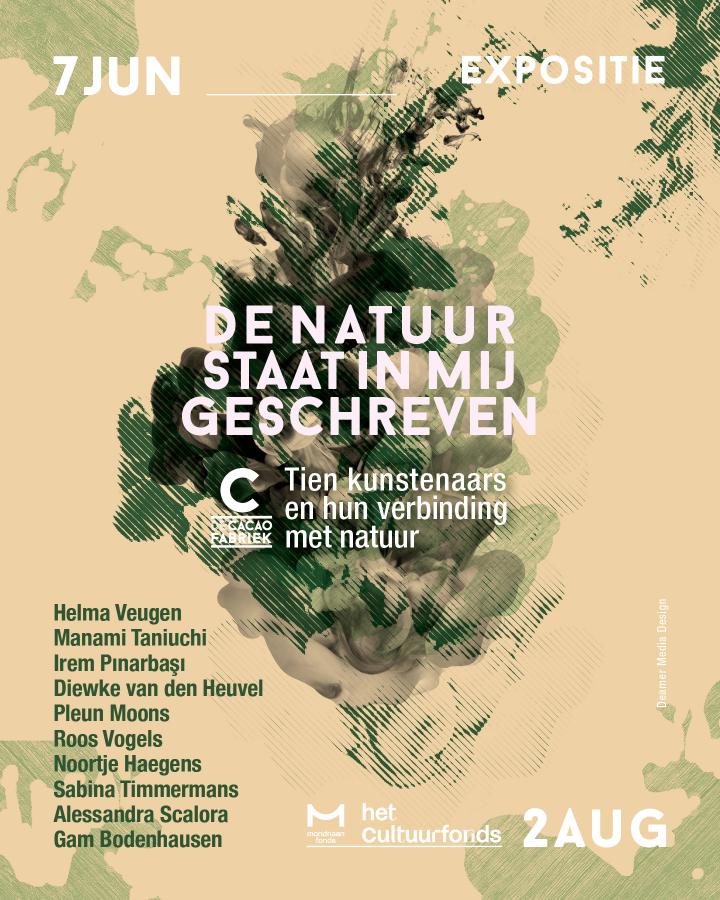
In this upcoming exhibition, ten artists explore different ways of perceiving and engaging with what we call 'nature'. The exhibition brings together quiet, intimate pieces alongside more monumental and expressive works.
With work by Alessandra Scalora, Irem Pınarbaşı, Roos Vogels, Helma Veugen, Pleun Moons, Gam Bodenhausen, Diewke van den Heuvel, Sabina Timmermans, Manami Taniuchi and Noortje Haegens.
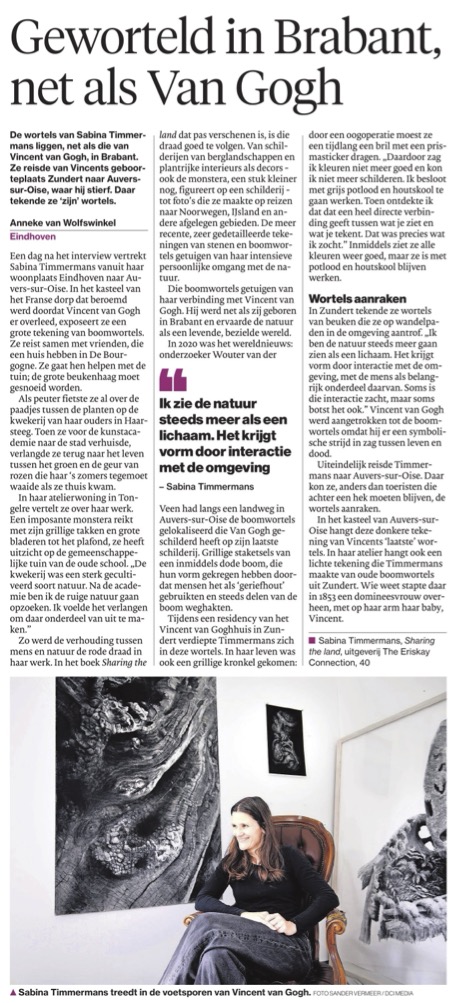
Anneke van Wofswinkel wrote an article about my work , my recent publication Sharing the Land, my projects with Vincent Van GoghHuis and the current groupshow in Auvers-sur-Oise where I show a drawing I made based on the Tree Roots Van Gogh painted on the last day of his life.
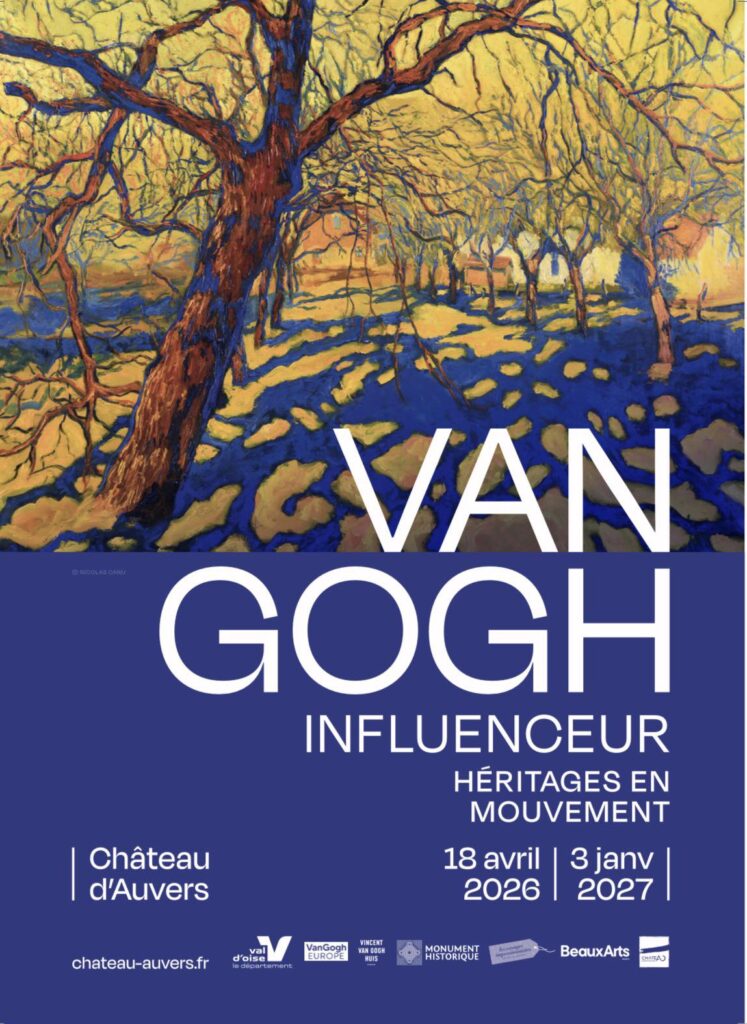
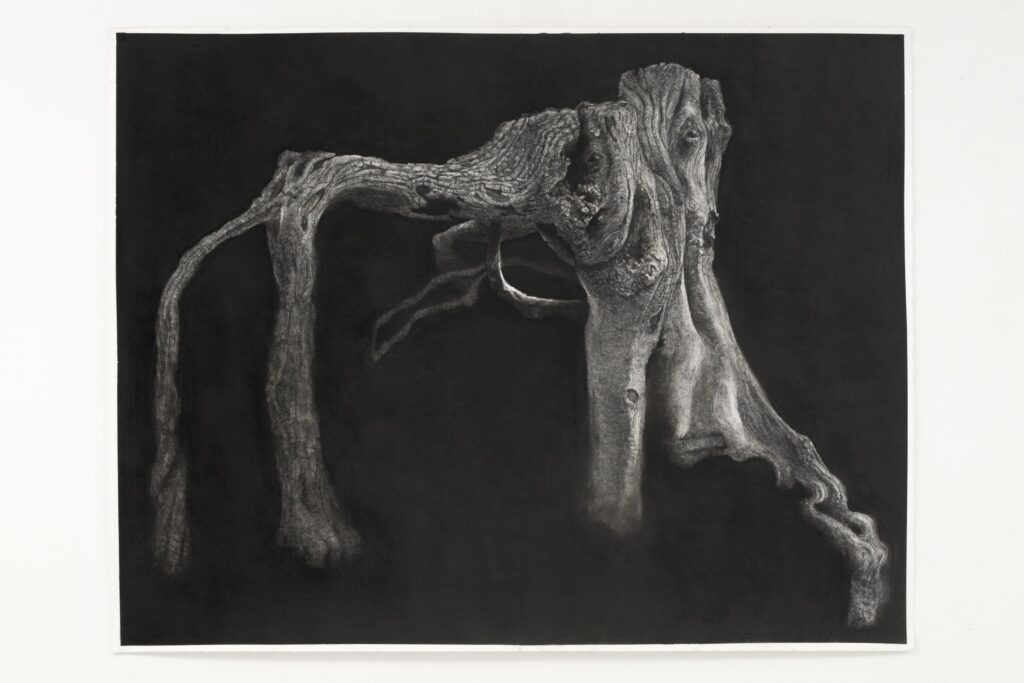
My work Roots 3 is part of the exhibition Van Gogh influenceur. Héritages en mouvement, currently on view at the Château d'Auvers in Auvers-sur-Oise, France. The exhibition traces Van Gogh's sources of inspiration and his lasting influence on contemporary art and creation. On view until 3 January 2027.
I warmly invite you to the opening of Birth of a Stone at Jan van Hoof Galerie on Sunday 8 March, from 2 to 6 PM.
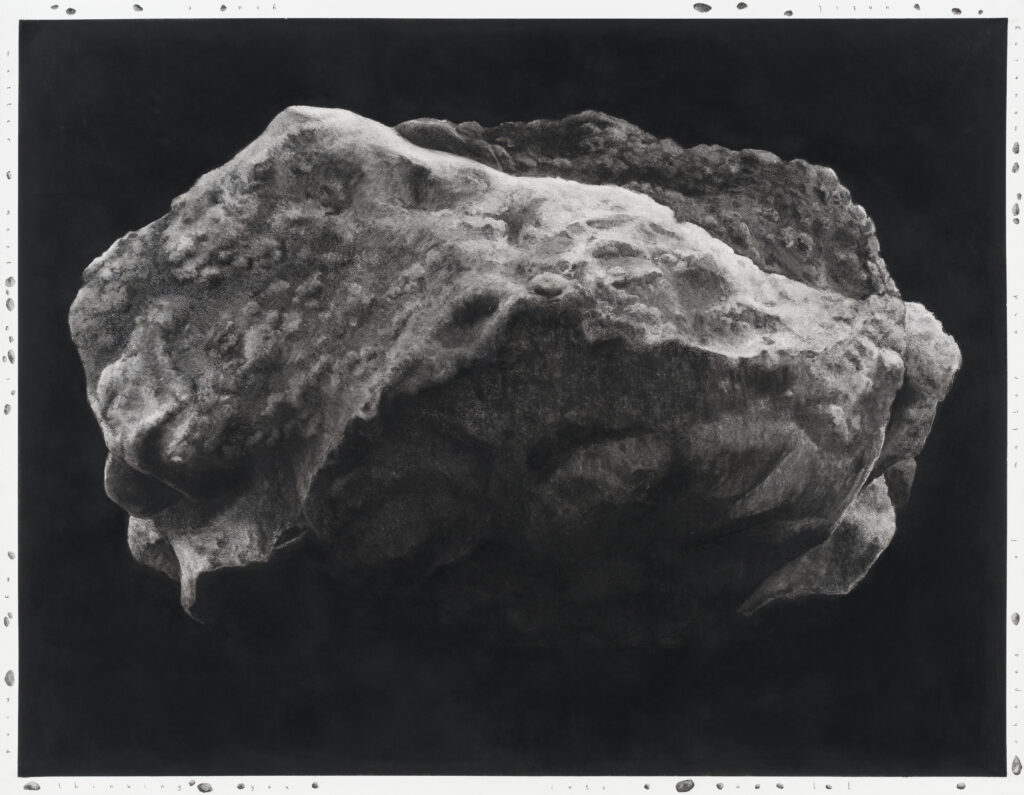
This exhibition presents my recent series Birth of a Stone, Death of a Thinker, inspired by my experiences during journeys across mountain peaks and glaciers in the Austrian Alps. The drawing series forms a poetic conversation with crumbling stones from unstable mountain formations.
A selection of charcoal drawings from Caressing and Colliding, Sharing the Land will also be on view.
The exhibition runs until 29 March. jan van hoof galerie, Vughterweg 58–60, ’s‑Hertogenbosch.
I’m delighted to share that my artist publication Sharing the Land will be released in March. It's been a long and inspiring journey, and I'm very grateful for everyone who helped make this publication into something beautiful. 💚 Sharing the Land is designed by Rob van Hoesel and published by The Eriskay Connection.
The official book launch will be on Saturday 28 March at 15.00 at jan van hoof galerie in 's-Hertogenbosch.
About Sharing the Land:
Sharing the Land explores how human beings perceive, represent, and give meaning to nature – and how these processes continually shape one another. For Sabina Timmermans (NL), the starting point is personal: growing up among the plants in her parents’ nursery garden fostered an intuitive connection with the living world, one that now underpins her artistic exploration of the ever-evolving relationship between humans and landscape.
Timmermans understands our perception of nature as a combination of physical encounters and cultural framing. Individual experiences are shaped, in part, by collective images passed down through art, literature, and science. She reflects on the influence of Romanticism, suggesting how its vision of ‘untouched nature’ has contributed to the persistent separation between humans and the natural world – a concept increasingly challenged within ecological and posthumanist thought.
Her practice spans drawing, painting, and spatial installation. Her work begins within landscapes, where prolonged embodied, sensory engagement forms a relation with place. She gathers observations, photographs, and notes, which in the studio develop into large charcoal drawings, collages, and clay models. For Timmermans, drawing is both a physical and meditative act, sustaining a ongoing dialogue with a place. By extracting natural forms from their original context and rendering them as sculptural, bodily presences, her images take on the resemblance of living beings. The layered process of creation mirrors the slow rhythms of natural growth.
Often working in series based on specific sites – mountains, forests, botanical gardens – Timmermans has undertaken residencies in the Netherlands, Germany, and Norway. Sharing the Land emphasises her focus on the creative process, combining artworks with photographs, field notes, and texts by guest writers Rebecca Nelemans and Norbert Peeters. Together, they contribute to an ongoing discourse on our relationship with nature, and invite the reader into a more conscious and sensorial encounter with the landscapes around them.
Price: € 40 Design: Rob van Hoesel Publisher: The Eriskay Connection Essays: Norbert Peeters & Rebecca Nelemans Lithography: Marc Gijzen Translation: Ro Heinrich & Ruth Legg Softcover, 144 pages, 220 × 300 mm, Dutch/English
Last week, I gave a guest lecture at Wageningen University and Research (WUR). We explored how our relationship with the natural world is shaped by both our personal experiences and our collective understanding of nature — informed by cultural traditions such as art, science, literature, and spirituality.
Through drawings, photographs, and excerpts from journals, I shared how physical and mental experiences with landscapes are part of my art practice — to better understand our (bodily) connection with it.
We did a creative writing exercise inspired by a drawing series I’m currently working on: Birth of a Stone, Death of a Thinker. Based on a photo I took in 2023 of an unstable mountain ridge in the Alps, students imagined what it would be like to be one of these stones. It was wonderful to hear the beautiful, imaginative short stories; from a stone that might end as a heartbroken sand grain, to a stone born from the tears of its mountain parents.
Many thanks to Norbert Peeters for the invitation!
Happy to share that in June and July I will be staying at NKD in Dale, Norway! NKD is an artist residency, located in Dalsfjorden, a narrow fjord 3 hours north of Bergen. I am looking forward to immersing myself in the landscape for two months and to be working on a new series of drawings.
Today is the opening of the group exhibition Vincents Boomwortels at Museum Vincent Van GoghHuis Zundert. Very pleased to be in the good company of Robert Zandvliet, Emmy Bergsma and Diana Roig.
" In 2020, Wouter van der Veen discovered the location in the French village of Auvers-sur-Oise where Vincent van Gogh created his last painting, Tree Roots. The original roots of the Robinia Pseudoacacia tree are still present there.
The owners of this heritage site granted artists access to make studies of the original roots. Emmy Bergsma (1960) traveled there several times to draw. Robert Zandvliet (1970) and Sabina Timmermans (1984) spent two days making sketches which they later elaborated on. Timmermans focused on large detailed studies, while Zandvliet created a monumental four-panel piece in colored monotype.
In 1999, Zandvliet painted a canvas inspired by Tree Roots. This work from the collection of the AkzoNobel Art Foundation will also be showcased at the exhibition. Additionally, there will be a large canvas by Diana Roig (1982) inspired by Van Gogh's last painting."
My contribution for Nothing but Good. I wrote a few words on Van Gogh's profound connection with nature, and how his last work Tree Roots served as a significant inspiration for my own practice in the last few years.
"Van Gogh’s final painting Tree Roots, served as the inspiration for a series of charcoal drawings I worked on for a year, called Caressing and Colliding - Sharing the Land. The location where Van Gogh likely encountered these roots and trunks was discovered the year before my residency at the Vincent van GoghHuis in Zundert in 2021. They were situated on a slope alongside a small street in Auvers-sur-Oise. According to a dendrologist, these roots and trunks were from coppiced trees, a form of forestry where new growth is repeatedly cut back for use. Some argue that Van Gogh expresses the struggle of life and death with this.
My aim for the residency was to connect his final painting and the place of his death, with the place where Van Gogh's life began, Zundert. While exploring the forests around the Vlaamse Schuur where I stayed, I looked for similar shapes symbolizing the struggle for life and death. Initially, I searched for the coppiced trees I knew were there, but I became increasingly intrigued by the numerous surface tree roots from old beech trees. In my drawings, I envisioned them as bodies shaped by their life-long interaction and entanglement with their surroundings; with soil, wind, water, humans and other organisms.
I gained a deeper understanding of how Van Gogh perceived nature, due to this residency. With new interest, I revisited his letters and his paintings depicting nature. I was captivated by how Van Gogh's trees transcend mere imagery, seeming to spring to life, imbued with a soul, as if they are speaking to you. It’s only since then that I read in his paintings the profound connection Van Gogh felt with nature, how he felt at one with it. I strongly resonate with this sensation, and it serves as a significant inspiration for my own artistic practice."
Nothing but good is a blog where invited artists show that they stand in a tradition by expressing their commitment to an inspiring, no longer living predecessor. Nothing But Good Should Be Said Of The Dead. A blog by Michael de Kok, René Korten and Reinoud van Vught.
Last Saturday I shared some of my thoughts on how our relationship with nature is shaped by both our personal experiences with landscapes we find ourselves in, as well as by cultural and historical narratives and perspectives that revolve around the concept of nature.
I regard my artistic practice as a continuous exploration of this ever-evolving relationship. I recently started working on a publication that showcases my art from the past 10 to 15 years, telling the story of this exploration.
The talk for ‘Vrienden Van Abbemuseum' provided a first glimpse into the upcoming book. Many thanks to Florence Husen for inviting me to give this talk, and to all the people who came to listen. Great to see the room was packed, truly enjoyed it!